


Tariffs are one of the most debated tools in economic policy because they sit at the intersection of jobs, prices, politics, and national strategy. Supporters argue that tariffs can protect domestic industries, strengthen supply chains, and give workers a fairer chance against imports produced under very different labor and cost conditions. Critics respond that tariffs often act like a tax on consumers and businesses, raising costs across the economy while delivering uneven benefits.
The central question is not simply whether tariffs are good or bad. It is whether they help enough workers, in enough places, for long enough, to justify the higher prices and market disruptions they can create. To answer that, it helps to look beyond slogans and examine how tariffs work, who pays them, who gains from them, and why the effects vary so much across industries and households.
How tariffs actually work in the real economy
A tariff is a tax placed on imported goods. When a product enters the United States from another country, the importer pays the tariff at the border. That importer may be a retailer, a manufacturer that uses foreign parts, or a distributor that sells products to other businesses. While the legal obligation to pay falls on the importer, the economic burden can spread much more widely.
In practice, a tariff can lead to several outcomes. Importers may absorb some of the cost through lower profit margins. Foreign suppliers may cut prices to remain competitive. Domestic producers may raise their own prices because imported alternatives are now more expensive. Retailers may pass some or most of the added cost to shoppers. Manufacturers that rely on imported inputs may pay more for materials, which can then increase the price of finished goods made in America.
This is why tariffs are often more complicated than they first appear. They do not affect only imported finished products sitting on store shelves. They can also affect machinery, steel, aluminum, chemicals, semiconductors, auto parts, and thousands of intermediate goods used by American firms. The result is a chain reaction through supply networks, production costs, and consumer prices.
For a basic explanation of how import duties function in trade policy, the definition of a tariff offers useful background on why governments use them and how they influence trade flows.
Why supporters believe tariffs can help workers
The strongest argument for tariffs is that they can give domestic workers and firms breathing room when facing intense foreign competition. This is especially relevant in industries where imports come from countries with lower wages, weaker environmental rules, heavy state subsidies, or strategic industrial policies designed to dominate global markets.
Protecting jobs in import exposed industries
When cheaper imports flood the market, domestic producers can lose sales, cut investment, and lay off workers. Tariffs can raise the price of imported goods enough to make American made products more competitive. In theory, that can preserve factories, maintain payrolls, and support communities built around manufacturing.

This argument tends to resonate most in sectors such as steel, aluminum, autos, appliances, and certain types of machinery. If a tariff narrows the price gap between domestic and imported goods, local producers may gain orders they would otherwise lose. That can help maintain not only direct factory jobs but also related employment in transportation, maintenance, logistics, and local services.
Encouraging domestic investment
Supporters also argue that tariffs can create incentives for companies to invest in U.S. production capacity. If imports face a lasting cost disadvantage, firms may choose to build plants in the United States, expand existing operations, or source more components domestically. In this view, tariffs are not just defensive. They are a way to shape the industrial base.
This can matter in industries linked to national security or long term resilience. Policymakers may worry that overreliance on foreign suppliers leaves the country vulnerable to geopolitical tensions, shipping disruptions, or sudden shortages. Tariffs can be used alongside tax incentives, procurement rules, and industrial policy to support local production of strategically important goods.
Strengthening bargaining power in trade negotiations
Another argument is that tariffs can be used as leverage. A government may impose or threaten tariffs to pressure trading partners to reduce barriers, stop unfair practices, or negotiate new agreements. In that sense, tariffs are sometimes seen as a tool to achieve broader trade reforms rather than as a permanent economic arrangement.
Whether this strategy succeeds depends on timing, diplomacy, and the willingness of other countries to compromise. Still, for supporters, tariffs can signal seriousness and create negotiating power that might not exist otherwise.
Why critics say tariffs often raise prices across America
The most common criticism is straightforward: tariffs increase costs. Since imported goods become more expensive, consumers and businesses often pay more. Even when the tariff targets a narrow set of products, the effect can spread because modern supply chains are deeply interconnected.
Consumers can face higher prices at the checkout
When tariffs apply to finished consumer goods such as appliances, electronics, clothing, or household items, retailers may pass along some of the higher cost. Even if the full increase is not immediate, prices can rise over time as inventories turn over and contracts reset.
There is also an indirect effect. Domestic producers that compete with imports may raise their own prices because the competitive pressure from lower priced foreign goods has eased. That means shoppers may pay more even when they buy products made in the United States.
For families living on tight budgets, even modest price increases matter. Tariffs can function like a broad consumption tax, especially when they affect everyday goods or products embedded in housing, transportation, and utilities.
American manufacturers can be hurt by higher input costs
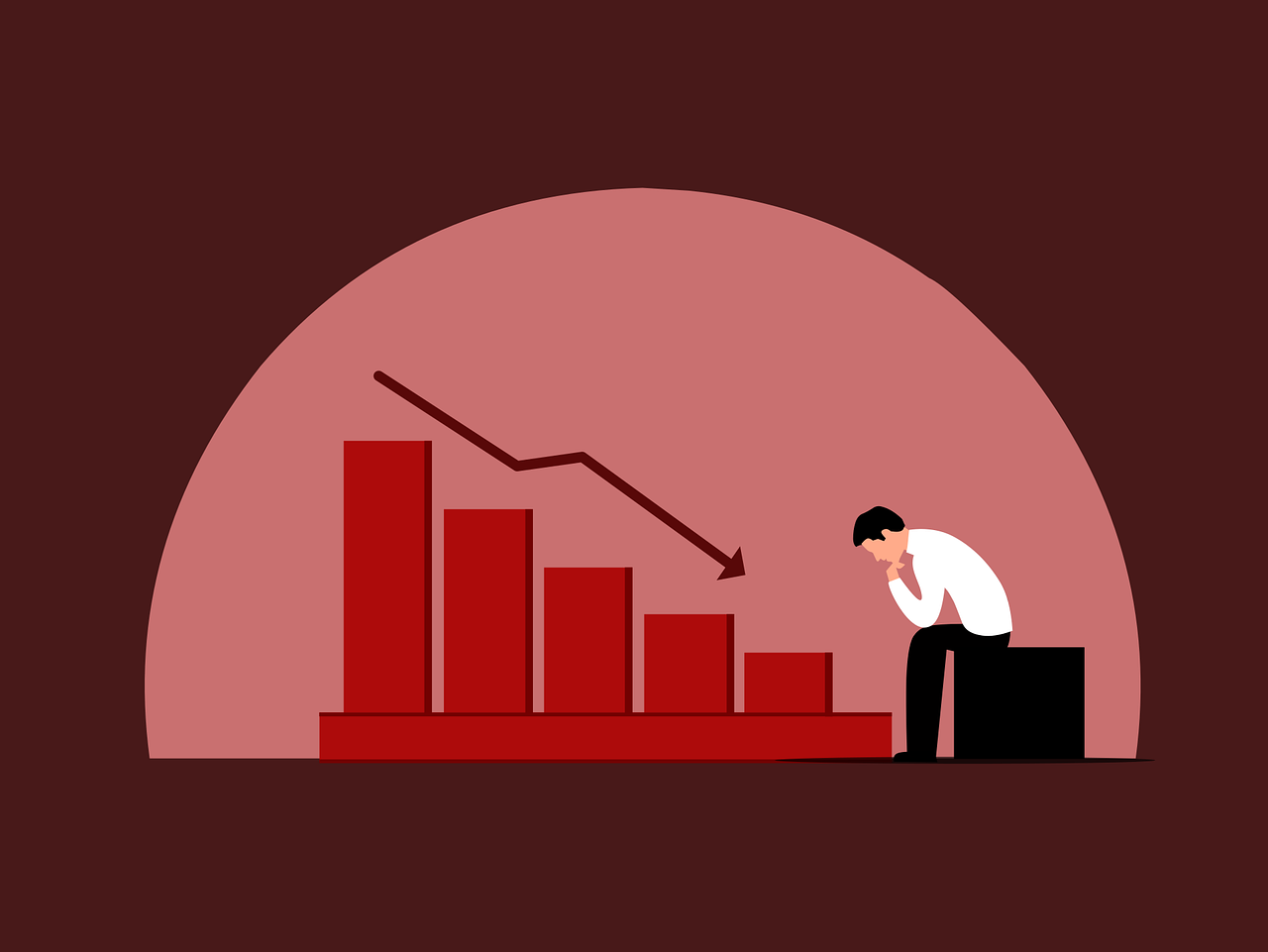
One of the biggest misunderstandings about tariffs is the assumption that they help all domestic producers. In reality, many American manufacturers rely on imported raw materials or components. If tariffs raise the cost of steel, aluminum, parts, or specialized inputs, U.S. factories may become less competitive both at home and abroad.
A company that makes farm equipment, for example, might pay more for metal and imported electronics. A construction firm might face higher material costs. An auto manufacturer might see increased costs for parts sourced from multiple countries. In each case, the tariff may help one segment of the economy while hurting another.
This is why tariff policy often creates winners and losers within the same industry. Producers of a protected input may benefit, while downstream firms that use that input may struggle with thinner margins or higher prices.
Retaliation can reduce export opportunities
Tariffs do not happen in a vacuum. Trading partners often respond with tariffs of their own. When that happens, American exporters can lose access to foreign markets or become less price competitive abroad. Farmers, manufacturers, and service providers may all feel the impact if overseas buyers turn to suppliers in other countries.
Retaliatory tariffs can be especially painful for sectors that depend heavily on exports. Agriculture is a classic example. If another country imposes tariffs on soybeans, pork, dairy, or other U.S. products, domestic producers can face falling demand and lower prices, even while costs at home are rising.
Who really pays for tariffs
The answer to this question is one of the most important parts of the debate. Legally, importers pay tariffs at the border. Economically, the final burden is shared depending on market conditions, competition, supply alternatives, and consumer demand.
If importers have little pricing power and face strong competition, they may absorb some of the cost. If foreign exporters are eager to keep market share, they may lower their prices somewhat. But when alternatives are limited or demand is relatively stable, much of the cost can move through the supply chain to businesses and households.
Research on past tariff episodes has often found that domestic buyers bear a meaningful share of the burden. That includes not only consumers but also firms that use imported goods as inputs. The exact split varies by product and period, but the broad lesson is that tariffs rarely fall only on foreign producers.
For readers who want a data driven overview of price effects and trade policy, the Federal Reserve analysis of tariff pass through helps explain how costs can move from the border to store shelves.
The case for targeted tariffs versus broad tariffs
Not all tariffs are designed the same way. A narrow tariff aimed at a specific product tied to dumping, subsidies, or national security concerns is very different from a broad tariff applied across many categories and countries.
Targeted tariffs can address specific distortions
When a foreign producer sells goods below cost, receives heavy state support, or benefits from unfair trade practices, targeted tariffs can be used to offset those distortions. In these cases, the goal is not simply to reduce imports. It is to restore a more level playing field.

Targeted measures can be more defensible when there is clear evidence of harm and when the protected sector is strategically important. They may also limit collateral damage if they are carefully designed and paired with review mechanisms.
Broad tariffs create wider ripple effects
Broad tariffs are more likely to raise costs across many sectors because they affect larger portions of the import system. They can also create uncertainty for businesses trying to plan investment, pricing, and sourcing decisions. If companies do not know whether tariffs will rise, fall, or expand, they may delay projects or hold excess inventory as a precaution.
That uncertainty has its own economic cost. Businesses value predictability, especially when supply chains cross borders multiple times before a final product is completed.
Tariffs, inflation, and the cost of living
One reason tariffs draw so much attention is their connection to inflation and household budgets. If tariffs increase the price of goods directly or indirectly, they can add to cost of living pressures. The effect may be small in some cases and larger in others, depending on the scale of the tariff and the products involved.
Tariffs are not the same as economy wide inflation caused by excess demand, loose monetary conditions, or major supply shocks. But they can contribute to inflationary pressure in affected categories. If those categories are widely used across the economy, the impact can spread.
For example, tariffs on industrial materials can affect construction costs, vehicle prices, machinery, and durable goods. Tariffs on consumer products can hit household budgets more directly. Lower income families may feel the burden more acutely because they spend a larger share of income on goods and essentials.
At the same time, supporters may argue that some price increases are worth accepting if they preserve jobs, support domestic capacity, or reduce strategic dependence on foreign suppliers. This is where the debate becomes less about pure economics and more about policy priorities. How much extra cost is society willing to bear for resilience, industrial strength, or labor protection?
What tariffs mean for different types of workers
The phrase “help workers” can be misleading because workers are not affected in the same way. Tariffs may benefit some groups while harming others.
Workers in protected industries
Employees in industries directly shielded from import competition may see the clearest benefits. If tariffs preserve output and employment at domestic plants, these workers may gain job security, steadier hours, and stronger bargaining power. In some cases, wages may improve if firms regain market share and profitability.
Workers in downstream industries
Workers at companies that use tariffed inputs may face the opposite outcome. If higher costs squeeze margins, firms may reduce hiring, postpone expansion, automate faster, or cut jobs. This can happen in sectors that are larger than the protected industry itself, which complicates claims about net employment gains.
Workers as consumers
Every worker is also a consumer. Even if tariffs help someone keep a job in one sector, that same person may pay more for appliances, vehicles, tools, housing materials, or everyday goods. For workers outside protected industries, the consumer side of the equation may dominate.
Regional differences

The impact of tariffs can vary by region. Areas with a strong base in protected manufacturing may benefit more, while regions dependent on trade, ports, farming, retail, or export oriented production may feel more downside. This helps explain why tariff politics often map onto local industrial structure rather than a single national experience.
Historical lessons from past tariff episodes
History shows that tariffs can produce mixed outcomes. In some periods, they have supported domestic industries during early development or strategic competition. In others, they have contributed to higher prices, retaliation, and inefficiency.
One lesson is that timing matters. Tariffs introduced during periods of economic stress or fragile supply chains can amplify disruption. Another lesson is that permanence matters. Temporary tariffs may give industries time to adjust, but long lasting protection can reduce incentives to innovate, control costs, or improve productivity.
There is also the question of scale. Small, targeted actions may have manageable side effects. Large, sweeping tariffs can reshape sourcing patterns, alter investment decisions, and provoke broad retaliation. Historical evidence rarely supports simple claims that tariffs always save jobs or always destroy growth. Their effects depend heavily on design, context, and the broader policy environment.
National security and strategic industry arguments
Some of the strongest support for tariffs comes not from traditional labor economics but from national security concerns. Policymakers may worry about dependence on foreign suppliers for semiconductors, critical minerals, energy technologies, pharmaceuticals, or defense related materials.
In these areas, the goal of tariffs may be less about short term price competition and more about building capacity that would be difficult to create in a crisis. Supporters argue that a nation should not rely too heavily on geopolitical rivals or fragile overseas networks for essential goods.
This argument has gained strength in an era shaped by pandemic disruptions, shipping bottlenecks, wars, and strategic rivalry. Even economists who are skeptical of broad protectionism sometimes accept a limited case for trade barriers or subsidies in sectors tied closely to security and resilience.
Still, the national security rationale can be overused. If every industry claims strategic importance, tariff policy can become too broad and costly. The challenge is to distinguish genuinely critical sectors from ordinary commercial interests seeking protection.
Are there better alternatives to tariffs for helping workers?
Even people who sympathize with workers hurt by trade may question whether tariffs are the best solution. There are several alternative or complementary policies that can support workers more directly and often with fewer economy wide price effects.
Wage support and adjustment assistance
Workers displaced by import competition can be helped through income support, retraining, relocation assistance, and targeted employment programs. These policies focus on people rather than products. Their weakness is political rather than conceptual. They are often underfunded, hard to access, or poorly aligned with local labor markets.
Industrial policy and investment incentives

If the goal is to strengthen domestic production, subsidies, tax credits, public procurement, and infrastructure investment may work better than tariffs alone. These tools can encourage capacity building without necessarily raising consumer prices as directly. They can also be tied to conditions such as domestic content, labor standards, or research commitments.
Stronger labor and competition policy
Helping workers is not only about trade. Wage stagnation, weak bargaining power, industry concentration, and underinvestment in skills all shape job quality. A broader worker centered agenda might include apprenticeship programs, antitrust enforcement, support for collective bargaining, and regional development strategies.
Trade enforcement without blanket protectionism
Governments can also respond to unfair trade practices through anti dumping rules, countervailing duties, dispute settlement, and coordinated action with allies. This approach aims to address distortions while limiting across the board cost increases.
The political appeal of tariffs
Tariffs remain politically powerful because they are easy to explain. A leader can say they are standing up for domestic jobs, punishing unfair competition, or defending national interests. The benefits are often visible and concentrated in specific factories or regions. The costs, by contrast, are dispersed across millions of consumers and businesses, making them less obvious at first glance.
This visibility gap matters. A factory reopening or a steel mill expansion makes headlines. Slightly higher prices for equipment, groceries, or household goods usually do not. As a result, tariffs can be attractive even when their overall economic effects are mixed.
They also fit a broader public mood that is more skeptical of hyper globalized supply chains than in past decades. After years of offshoring, many voters are more open to policies that prioritize domestic production, even if those policies involve tradeoffs.
So, will tariffs help workers or raise prices?
The honest answer is that they can do both. Tariffs can help certain workers in certain industries, especially where import competition is intense, unfair practices are present, or strategic capacity is at stake. They can preserve jobs, support investment, and give domestic producers a stronger foothold.
But tariffs also tend to raise costs somewhere in the system. Consumers may pay more. Manufacturers that rely on imported inputs may become less competitive. Exporters may suffer if other countries retaliate. Some workers gain protection while others face new pressures. The net effect depends on how broad the tariffs are, how long they stay in place, what products they cover, and whether they are paired with smarter domestic policies.
If the policy goal is to help workers broadly across America, tariffs alone are usually too blunt an instrument. They are most defensible when they are targeted, evidence based, and tied to a larger strategy for industrial capacity, fair competition, and worker support. If used carelessly or too broadly, they are more likely to function as a price raising tax that spreads pain across households and businesses.
In the end, the tariff debate is really about tradeoffs. America can use tariffs to protect parts of its industrial base, but that protection is rarely free. The key question is not whether tariffs have costs. They do. The real question is whether the benefits are large enough, focused enough, and strategic enough to justify those costs. That is the standard any serious tariff policy should have to meet.