

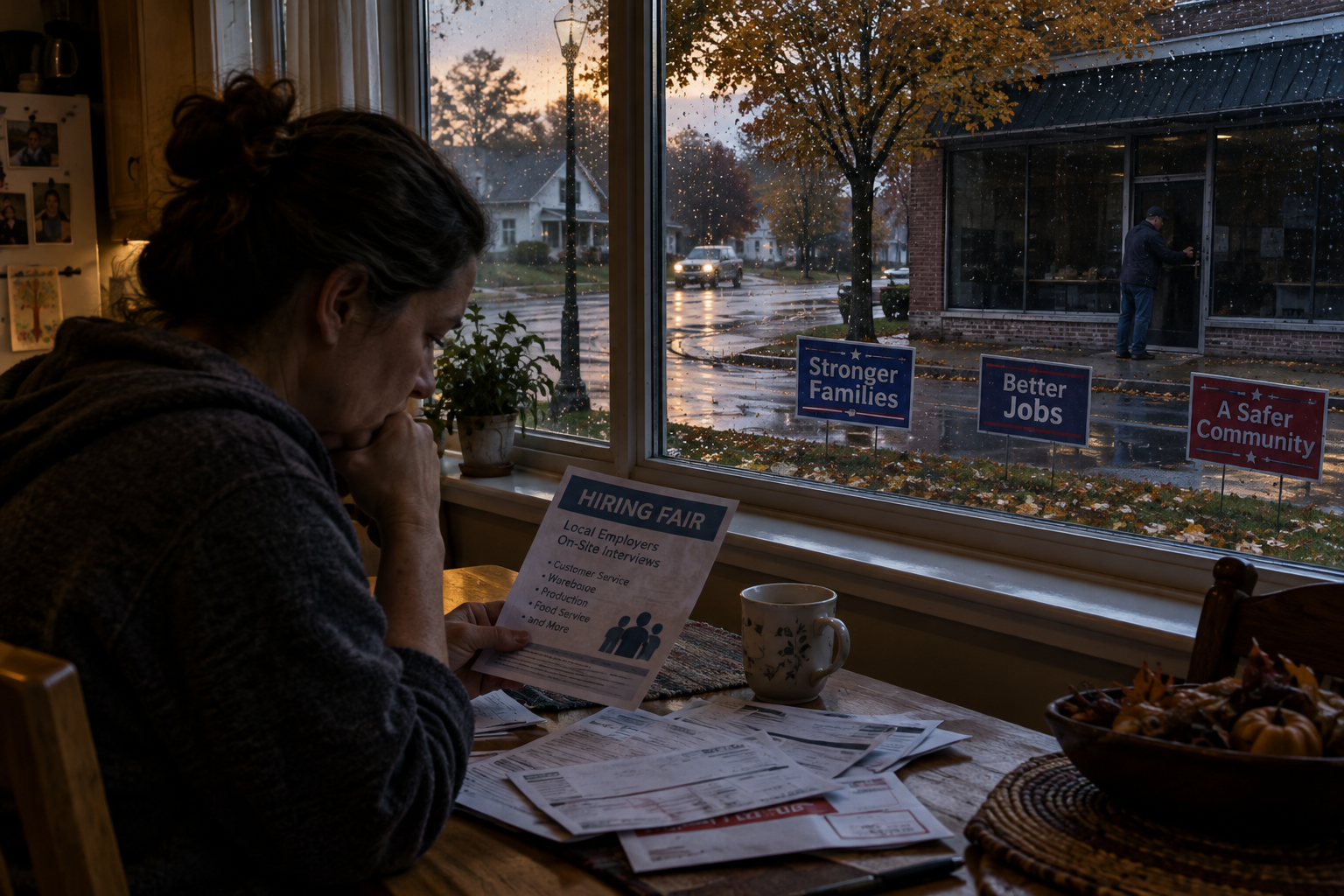
When the job market starts to cool, the effects reach far beyond monthly payroll reports or stock market headlines. A slowing labor market changes how families budget, how businesses hire and invest, and how voters judge the health of the economy. Even when unemployment remains relatively low, a shift from rapid hiring to cautious staffing can alter confidence in ways that are both immediate and lasting.
For many people, the labor market is the economy they feel most directly. It shapes wage growth, career mobility, household stability, and the sense of whether tomorrow will be easier or harder than today. Understanding what a slower job market really means requires looking past a single statistic and examining how employment conditions ripple through households, workplaces, and public life.
Why labor market slowdowns matter before a recession even begins
A slowing job market does not always mean a recession has arrived. In many cases, it begins as a moderation. Employers post fewer openings. Workers receive fewer recruiter calls. Raises become smaller. Temporary contracts are not renewed as quickly. Job seekers take longer to find roles that match their experience. These changes can happen months before a broader downturn becomes obvious.
This is one reason labor market data receives so much attention from economists, policymakers, and business leaders. Employment trends often reveal where demand is softening and where financial stress may emerge next. Measures such as job openings, quits, wage growth, labor force participation, and initial unemployment claims can provide early clues about whether an economy is simply cooling after a hot period or moving toward a more serious contraction.
The Job Openings and Labor Turnover Survey is especially useful because it shows not only how many people are employed, but also how confident employers and workers are. When openings fall and quit rates decline, workers may feel less secure about switching jobs for better pay. That can reduce wage pressure and slow consumer spending, even before layoffs rise sharply.
In practical terms, a slower job market matters because labor income is the foundation of most household finances. Families can absorb higher prices for a while if wages are rising and jobs are plentiful. They can handle interest rate increases more easily if they expect stable employment. But when hiring weakens, financial resilience starts to erode. A household does not need to lose a job to feel the pressure. The fear of losing one can be enough to change behavior.
How families experience a cooling employment picture
For families, the first sign of a slowing job market is often not unemployment. It is uncertainty. A parent who was considering changing jobs may decide to stay put. A recent graduate may move back home because entry level positions are harder to find. A household planning to buy a home may postpone the decision because future income feels less predictable.

This uncertainty affects spending patterns quickly. Families tend to cut discretionary purchases first. Dining out becomes less frequent. Vacations are delayed. Home improvement projects are put on hold. Big ticket items such as cars, furniture, and appliances may be deferred unless absolutely necessary. These decisions may seem personal and isolated, but when millions of households make them at once, they weaken demand across the economy.
Pressure on wages and bargaining power
In a strong labor market, workers often have more leverage. Employers compete for talent, wages rise faster, and employees can negotiate for better schedules, benefits, or remote work flexibility. In a slowing market, that balance shifts. Even if pay does not fall outright, wage growth may slow enough that inflation eats away at purchasing power.
This matters especially for middle income and lower income families, which tend to spend a larger share of their earnings on essentials such as housing, food, transportation, child care, and health care. If wages flatten while costs remain elevated, families can feel poorer even if they remain employed. Their financial stress may show up in rising credit card balances, reduced savings, or delayed medical and educational expenses.
Workers also lose some mobility in a cooler market. The chance to improve earnings often comes from switching employers, not staying with the same one. When job openings shrink, that path narrows. People may remain in roles that no longer fit their skills or family needs simply because alternatives look riskier.
Young workers and new graduates face outsized risks
Early career workers are often among the most vulnerable when hiring slows. They have less experience, fewer professional networks, and less savings to cushion a prolonged job search. New graduates entering a weak labor market may accept lower salaries, underemployment, or temporary work that does not match their training.
Research has shown that graduating into a weak economy can affect earnings for years. A poor first job match can delay skill development and reduce future wage growth. Families may feel these effects in practical ways, from carrying adult children on household budgets longer to postponing retirement contributions in order to provide support.
The same is true for workers trying to reenter the labor force after caregiving, illness, or unemployment. In a hot market, employers may be more open to nontraditional resumes. In a slower market, hiring managers often become pickier. Gaps in employment can become harder to overcome.
Housing decisions become more cautious
The labor market and housing market are tightly connected. People are more likely to buy homes, sign leases, relocate, or renovate when they feel secure in their jobs. A slowing job market can reduce that confidence quickly. Even households with stable incomes may become hesitant to take on large monthly obligations.
This caution affects first time buyers especially strongly. Mortgage qualification depends not only on current income, but also on confidence about future employment. If job prospects weaken, more households stay in place. That can soften housing demand, reduce mobility, and limit the normal flow of workers moving to regions with better opportunities.
Renters also feel the pressure. If income growth slows, rent increases become harder to absorb. Families may double up with relatives or roommates, move farther from job centers, or remain in housing that no longer fits their needs. These choices can affect commuting time, child care arrangements, school stability, and overall quality of life.

What a slower job market means for businesses
Businesses experience a cooling labor market in different ways depending on their size, industry, and financial position. For some employers, a slower market offers relief after a period of intense hiring competition and rapid wage increases. For others, it signals weakening customer demand and the need to protect cash flow.
Large firms with strong balance sheets may respond by slowing hiring rather than cutting staff immediately. They might freeze open positions, reduce contractor spending, trim travel budgets, or delay expansion plans. Smaller businesses often have less room to maneuver. If revenue softens, they may need to cut hours, postpone raises, or reduce headcount more quickly.
Hiring becomes more selective
One of the clearest changes in a slowing job market is a more selective hiring process. Employers may still post openings, but they often take longer to fill them and demand a closer fit. Job descriptions become more specific. Interview rounds increase. Salary bands may narrow. Internal approvals for new roles can become harder to secure.
From a business perspective, this caution is understandable. Labor is one of the largest expenses for many organizations. If leaders are uncertain about future sales, they are less likely to add permanent staff. Instead, they may ask existing teams to do more, automate routine tasks, or rely on part time and project based support.
This can improve short term cost control, but it also carries risks. Overworked teams may burn out. Innovation may slow. Customer service can suffer. Companies that become too defensive may miss growth opportunities or lose top talent to firms that remain willing to invest.
Consumer facing sectors feel the shift early
Retail, hospitality, restaurants, travel, and personal services often feel labor market slowdowns early because they depend heavily on discretionary spending. When families pull back, these sectors see softer demand quickly. That can lead to shorter hours, fewer seasonal hires, and lower tips for service workers.
Manufacturing and transportation may also weaken if orders decline and inventories rise. Professional services can hold up longer, but they are not immune. If clients reduce spending, consulting, marketing, legal, and technology projects may be delayed or scaled back.
Health care and education can be more stable, but even those sectors face labor market pressures. Staffing shortages may ease somewhat in a cooler economy, yet budget constraints can still limit hiring and wage growth. Public sector employers may also become cautious if tax revenues soften.
Productivity, retention, and training take on new importance
When hiring slows, businesses often focus more on productivity. Instead of expanding headcount, they look for ways to get more output from existing teams. That can include better software, redesigned workflows, cross training, and closer performance management.
Retention also becomes more strategic. In a weak market, some executives assume workers will stay because outside options are limited. That can be a mistake. High performers still have choices, and morale can deteriorate quickly if employees feel stuck, undervalued, or overburdened. Smart employers use slower periods to strengthen management quality, improve communication, and invest in training that prepares workers for future growth.
In fact, a cooling labor market can be an opportunity for businesses that think long term. If labor shortages ease, companies may be able to hire skilled workers who were previously unavailable. They may also find time to improve internal systems rather than constantly scrambling to recruit. The key difference is whether leadership sees the slowdown as a temporary adjustment or the start of a deeper downturn.
The broader economic chain reaction
The job market sits at the center of the economy because employment drives income, and income drives spending. When labor conditions soften, the effects spread through multiple channels. Consumer demand weakens. Business investment becomes more cautious. Tax revenues may slow. Credit quality can deteriorate if households struggle to keep up with payments.
This feedback loop is one reason central banks and fiscal policymakers watch labor data so closely. A labor market that is too hot can contribute to inflation if wages and demand rise faster than supply. A labor market that cools too quickly can weaken growth and increase financial stress. Policymakers are often trying to guide the economy toward a narrow middle path.
For readers looking to understand how employment fits into the bigger picture, the Federal Reserve provides a useful overview of monetary policy and how interest rates influence demand, hiring, and inflation. Higher rates can slow business investment and consumer borrowing, which may help reduce inflation but can also soften the labor market over time.
Confidence can change faster than the data
One challenge in interpreting a slowing job market is that sentiment often shifts before the official numbers look alarming. Families and business owners react to headlines, anecdotes, company announcements, and personal experience. If enough people believe conditions are worsening, they may cut spending or hiring in ways that help bring about the slowdown they fear.
This does not mean concerns are irrational. It means confidence is economically powerful. A household that delays a car purchase because one spouse fears layoffs contributes to softer retail demand. A small business that pauses hiring because customers seem more cautious contributes to fewer job opportunities. These individual choices add up.
That is why labor market slowdowns can feel confusing in real time. The unemployment rate may still look healthy while many people report that finding a good job has become much harder. Both can be true. Labor markets often weaken at the margins first, through slower hiring, fewer openings, reduced hours, and weaker wage growth.
Who is most vulnerable when hiring slows
Not all workers experience a slowing job market equally. Economic slowdowns tend to magnify existing inequalities across income, education, geography, race, age, and occupation. People with in demand technical or professional skills may still find opportunities, while workers in cyclical or lower wage sectors face greater instability.
Lower wage workers and part time employees
Workers in retail, food service, warehousing, hospitality, and other hourly roles often see hours cut before jobs disappear entirely. A reduction from 40 hours to 30 can significantly reduce take home pay, especially for households living paycheck to paycheck. Because many of these workers have limited savings, even modest income losses can quickly lead to missed bills or debt accumulation.

Part time workers who want full time employment are especially exposed. In a slowing market, employers may prefer flexible staffing rather than permanent full time commitments. That leaves many workers underemployed, with unstable schedules and limited access to benefits.
Regions dependent on a few industries
Some local economies are more vulnerable than others. A city heavily reliant on technology, manufacturing, energy, tourism, or government contracting can feel labor market shifts more sharply if that sector pulls back. Families in these areas may face a double hit if both job opportunities and local business activity decline together.
Regional disparities also matter politically. National averages can mask the reality that some communities are doing relatively well while others are struggling. Voters often judge the economy based on what they see around them, not on broad national indicators alone.
Parents and caregivers
Parents, especially those balancing child care or elder care responsibilities, can face unique challenges in a slower job market. If flexible roles become scarcer, it may be harder to find work that fits family needs. A layoff can be especially disruptive if it also means losing health insurance or a schedule that aligned with school hours and caregiving duties.
For dual income households, one partner’s job loss can force a complete reworking of family logistics. Child care arrangements may change. Retirement contributions may stop. Emergency savings may be used for everyday bills rather than true emergencies. The financial and emotional strain can be significant even if unemployment is temporary.
How voters interpret a slowing job market
The labor market is one of the most politically important parts of the economy because it shapes everyday experience. Voters may not track bond yields or industrial production, but they notice whether friends are getting laid off, whether wages are keeping up, and whether recent graduates can find work.
A slowing job market can influence elections in several ways. First, it affects perceptions of economic competence. Incumbent leaders often receive credit when hiring is strong and blame when it weakens, even if the causes are global or long in the making. Second, it changes which issues feel most urgent. Concerns about inflation may remain important, but job security can quickly move to the forefront when hiring stalls.
The gap between official data and lived experience
One reason economic politics can be volatile is that official measures do not always match public feeling. An unemployment rate that looks low on paper may coexist with widespread frustration if people believe the jobs available are lower quality, less secure, or less well paid than before. Voters care about more than whether jobs exist. They care about whether those jobs support a stable life.
This gap matters because political narratives often form around lived experience. If families feel they have less room in the budget, if younger workers see fewer opportunities, or if small businesses are pulling back, confidence in economic leadership can erode even without a dramatic spike in unemployment.
Policy debates become sharper
As the job market slows, debates over interest rates, government spending, taxes, immigration, trade, and industrial policy often intensify. Some voters prioritize inflation control and fiscal restraint. Others emphasize job creation, safety net support, or public investment. A cooler labor market can make these tradeoffs feel more immediate and personal.

It can also shift the political conversation from abstract macroeconomics to practical concerns. People ask whether schools are preparing students for available jobs, whether infrastructure projects are creating local work, whether child care costs are keeping parents out of the labor force, and whether health care tied to employment makes job loss too risky.
What families and businesses can do during a labor market slowdown
While no household or company can control the broader economy, both can take steps to become more resilient when the labor market cools.
For families
Families often benefit from reviewing budgets before a crisis hits. Building even a modest emergency fund can reduce the need for high cost debt if income is interrupted. Updating resumes, maintaining professional networks, and continuing skill development can improve job security and mobility. Households may also want to evaluate recurring expenses, insurance coverage, and debt obligations while income is still steady.
For workers, adaptability matters. Skills tied to digital tools, communication, project management, and problem solving often remain valuable across industries. Workers who can show measurable impact and flexibility may be better positioned if hiring becomes more selective.
For businesses
Businesses can prepare by stress testing budgets, improving cash flow management, and clarifying which roles are essential to long term strategy. Rather than relying only on layoffs as a response to weaker demand, firms can consider redeployment, training, process improvements, and scenario planning. Transparent communication with employees also matters. Uncertainty is easier to manage when expectations are clear.
Companies that maintain discipline without retreating entirely may emerge stronger. If they keep investing in customer relationships, technology, and workforce capability, they can be better positioned when conditions improve.
What to watch next in the economy
A slowing job market is best understood as part of a larger economic transition. The key question is whether the slowdown remains orderly or turns into something more severe. Analysts typically watch several indicators together: payroll growth, unemployment, labor force participation, wage trends, job openings, layoffs, consumer spending, and business investment.
If hiring cools while inflation falls and household finances remain reasonably stable, the economy may move toward a softer landing. If hiring weakens sharply, layoffs rise, and spending contracts, the risk of recession increases. The difference often depends on how quickly policy, credit conditions, and confidence interact.
It is also important to watch the quality of jobs being created. A labor market can add positions while still feeling weak if gains are concentrated in lower wage sectors or if full time opportunities are replaced by part time work. For families and voters, job quality matters almost as much as job quantity.
Takeaways
A slowing job market is more than a technical economic development. It affects how secure families feel, how boldly businesses invest, and how voters judge the direction of the country. The earliest signs often appear not in mass layoffs, but in quieter shifts: fewer openings, slower wage growth, longer job searches, reduced mobility, and rising caution in household and business decisions.
For families, that can mean tighter budgets, delayed milestones, and greater anxiety about the future. For businesses, it can mean more selective hiring, pressure on demand, and a renewed focus on productivity and resilience. For voters, it can reshape