

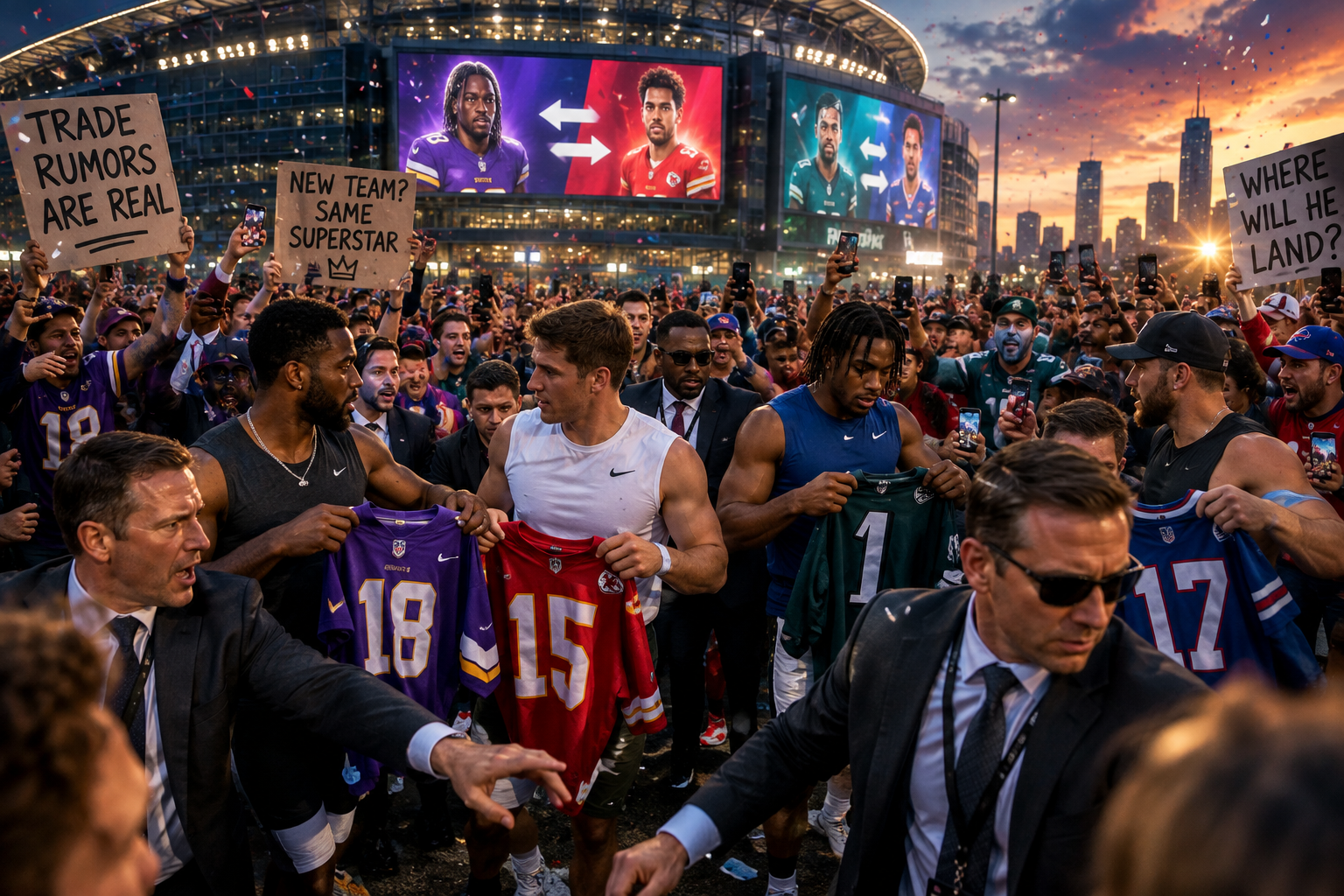
There was a time when the NFL offseason felt like a quiet bridge between the Super Bowl and training camp. Fans would check in for the draft, glance at a few free agency headlines, and then mostly move on until August. That version of the league is gone. In its place is a nonstop, high intensity, deeply theatrical calendar that commands attention nearly every week of the year.
Today, the NFL offseason is not merely a break from football. It is football by other means. Contracts become cliffhangers. Coaching changes become franchise defining events. The scouting combine turns into a made for television showcase. Social media clips from private workouts spark debates that feel as urgent as game day arguments in October. The result is a modern sports phenomenon: an offseason that delivers conflict, suspense, and spectacle so effectively that fans cannot look away.
The modern NFL calendar never really stops
The biggest reason the offseason has become a full contact spectacle is simple: the NFL has transformed the calendar into a year round product. Instead of one long pause, the league now offers a sequence of interconnected events, each with its own drama, language, and stakes. The end of one season immediately becomes the beginning of another story.
Within days of the Super Bowl, attention shifts to coaching staffs, front office changes, and quarterback futures. Soon after, the scouting combine arrives with stopwatch times, medical updates, interviews, and rumors. Free agency follows with major signings, surprise cuts, and cap related maneuvering. Then comes the draft, which has become one of the most watched events in American sports. Even after that, organized team activities, minicamps, and training camp previews keep the cycle moving.
This structure matters because it gives fans a reason to stay engaged. Every phase feels consequential. A January coordinator hire can influence a team’s identity in September. A March contract decision can determine whether a roster remains competitive. An April draft pick can reshape a division for years. The offseason no longer feels like filler because every transaction is framed as a turning point.
The league also benefits from the fact that football is uniquely suited to this kind of serialized storytelling. NFL rosters are large, the salary cap creates constant tension, and quarterback play affects everything. That means even small moves can be discussed as part of a larger strategic puzzle. Fans are not just watching a team. They are tracking a living, shifting ecosystem.
Free agency has become a major entertainment event

Few offseason periods capture the new intensity of the NFL better than free agency. What was once a transactional process followed mainly by insiders has become a national event driven by rumor, urgency, and emotional swings. Fans monitor legal tampering windows, contract figures, guaranteed money, and cap implications with the focus once reserved for playoff box scores.
Part of the appeal is that free agency gives every team hope, or at least the illusion of it. A struggling franchise can sign a pass rusher, a cornerback, or a veteran quarterback and instantly change the tone of the conversation. A contender can add one more weapon and convince its fan base that a championship run is within reach. Even teams that lose players remain central to the drama because departures force difficult questions about roster building and organizational priorities.
The language of free agency also adds to the spectacle. Terms like franchise tag, dead money, void years, restructures, and guarantees have become common fan vocabulary. The average follower now understands enough about roster construction to argue whether a deal is smart, reckless, or necessary. That level of fluency turns every signing into a debate, and every debate into content.
There is also a human element. Free agency is one of the few moments when players publicly navigate leverage, loyalty, market value, and identity. Fans watch favorite stars weigh legacy against compensation, scheme fit against geography, and stability against opportunity. Those choices feel personal even when they are business decisions. That emotional layer makes free agency more compelling than a simple spreadsheet exercise.
The cap is part strategy, part theater
The NFL salary cap has become one of the central engines of offseason fascination. It creates boundaries, but it also creates creativity. Teams can extend veterans, convert salary into bonuses, add void years, and backload contracts in ways that make roster building feel like a chess match. Fans may not agree on every detail, but they understand that cap management can separate smart organizations from reckless ones.
For readers who want the underlying framework, the NFL salary cap system helps explain why so many headline moves happen when they do. The cap is not just accounting. It shapes windows of contention, determines which veterans stay or go, and influences whether teams can surround a quarterback with enough talent to compete.
That is why cap season feels almost combative. Every fan base wants to believe its front office has discovered a clever way to keep stars, add help, and avoid consequences. Rival fan bases respond by predicting future collapse. Analysts rank winners and losers before players even put on the uniform. It is football discourse without football, and somehow it still feels physical.
The draft is now a national obsession
If free agency is a fast moving market drama, the NFL Draft is a three day civic ritual. It combines scouting, psychology, projection, and pure theater in a way no other league can match. Fans study prospects for months, consume mock drafts with near religious dedication, and then react to each selection as if it reveals the soul of the franchise.

The draft works because it offers both certainty and mystery. Teams know their needs, but nobody truly knows how a 21 year old prospect will respond to the speed, pressure, and complexity of the NFL. That uncertainty invites endless analysis. Is a quarterback a franchise cornerstone or a system creation? Is a wide receiver polished enough to contribute immediately? Is a tackle athletic enough to survive against elite edge rushers?
Every pick becomes a statement about philosophy. Some teams prioritize traits and upside. Others favor production and experience. Some build through the trenches. Others chase explosive skill players. The draft is not only about talent acquisition. It is about identity formation, and fans are deeply invested in what that identity says about the future.
The event itself has become highly polished entertainment. There are green room storylines, live crowd reactions, trade alerts, emotional family moments, and instant grades. Television coverage treats Day 1 like a championship broadcast, and even later rounds draw committed audiences. In many ways, the draft is the clearest proof that NFL interest no longer depends on live games alone.
Prospect culture keeps the conversation alive for months
Another reason the draft has exploded is the rise of prospect culture. College football overlap, scouting websites, podcasts, film breakdown channels, and data driven analysis have created a year round information pipeline. Fans no longer meet draft prospects in April. They follow them through college seasons, bowl games, all star showcases, combine testing, and pro days.
This layered buildup turns prospects into characters with evolving narratives. A quarterback can rise because of arm talent, fall because of decision making concerns, and rise again after a strong interview cycle. A small school pass rusher can go from obscurity to first round buzz. A productive college star can become polarizing because analysts disagree about positional value or athletic ceiling. These arcs are compelling because they blend evidence with imagination.
The combine adds another layer of spectacle. Numbers from the 40 yard dash, broad jump, and shuttle drills become talking points across the sports world. While testing does not tell the whole story, it creates unforgettable moments and sharpens comparisons. For a league obsessed with speed and explosiveness, measurable traits carry enormous symbolic power.
For broader context on why athletic testing matters in elite competition, resources from the National Library of Medicine on athletic performance factors help explain how speed, power, and physical readiness influence outcomes. In football, those traits are never the full answer, but they remain central to projection and evaluation.
Quarterback movement turns the offseason into a reality show

Nothing drives offseason attention like quarterback uncertainty. Because the position is so important, any hint of movement instantly changes the leaguewide conversation. A veteran asking for a trade, a young starter entering a contract year, or a top prospect rising up draft boards can dominate headlines for weeks.
This is where the offseason starts to resemble prestige television. There are negotiations, leaks, strategic silences, and public statements that may or may not mean what they appear to mean. Teams posture. Agents apply pressure. Media figures interpret body language and word choice. Fans parse every report for hidden meaning.
The quarterback market is especially dramatic because it affects multiple teams at once. If one veteran becomes available, several franchises may be forced to reveal how they view their current starter. If a club trades up in the draft, another team may pivot toward a bridge option. One contract extension can reset the market for everyone else. The ripple effects are massive.
Quarterback movement also creates emotional extremes. Hope arrives quickly and disappears just as fast. A fan base can go from dreaming of a turnaround to fearing a rebuild in a single afternoon. That volatility is a major reason people stay locked in. The offseason offers all the suspense of competition, just translated into decision making rather than touchdowns.
Coaching changes are now treated like star acquisitions
Another major shift in the offseason spectacle is the elevated status of coaches. Hiring a head coach or coordinator is no longer seen as a background organizational move. It is a public referendum on vision, culture, adaptability, and leadership. Fans study press conferences, scheme histories, and coaching trees with serious intent.
This makes sense in a league where tactical edges matter and quarterback development can define an era. A creative offensive play caller can revive a stalled career. A disciplined defensive coach can reshape a unit’s identity in one season. Because the margins are so thin, coaching hires feel like direct investments in wins.
Media coverage reinforces this by treating coaching searches like recruiting battles. Which candidates are in demand? Which owners are patient enough to run a thorough process? Which general managers are aligned with their coach? The process itself becomes part of the narrative, especially when teams appear disorganized or divided.
There is also a philosophical dimension. Fans are not just asking whether a coach can call plays. They want to know whether a leader can build trust, manage pressure, develop young talent, and make smart in game decisions. Those questions are difficult to answer, which keeps debate alive long after a hire is announced.
Social media turned every workout into an event

If the league built the offseason structure, social media supplied the accelerant. Platforms now turn ordinary offseason moments into mini events. A quarterback throwing to receivers at a private session becomes a trending topic. A star player posting a cryptic message sparks trade speculation. A training clip can trigger arguments about whether a player looks faster, stronger, leaner, or fully recovered.
This constant stream of content collapses the distance between fans and teams. Supporters feel as if they are seeing the preparation in real time. They get glimpses of chemistry, body language, and work habits. Even if those glimpses are curated, they create the perception of access, and access fuels investment.
Social media also rewards strong reactions. Optimism, panic, sarcasm, and tribal loyalty all perform well. That encourages a style of offseason conversation that feels confrontational, immediate, and emotionally charged. In other words, full contact. Every rumor is contested. Every contract is judged. Every draft pick is either genius or malpractice within minutes.
At the same time, players now have more power to shape their own narratives. They can address reports directly, tease future plans, celebrate teammates, or apply subtle pressure to organizations. This direct communication makes the offseason feel less filtered and more unpredictable. Fans are not just hearing about the spectacle. They are watching participants actively create it.
Fantasy football and sports betting changed how fans consume the offseason
The rise of fantasy football and legal sports betting in many jurisdictions has added another layer to offseason obsession. Fans no longer care only about whether their favorite team improved. They also care about target share, offensive line continuity, coaching tendencies, touchdown equity, and schedule implications. The offseason is now a research season.
A receiver signing with a pass heavy offense can alter fantasy rankings overnight. A coordinator change can raise or lower expectations for an entire backfield. A rookie quarterback landing with strong protection and a creative play caller can become a popular sleeper storyline months before Week 1. These angles keep even neutral fans engaged with teams outside their home market.
Betting markets amplify this further. Futures on division winners, playoff appearances, MVP candidates, and season win totals react to offseason developments in real time. A major free agent signing or injury update can shift prices and prompt new waves of analysis. Fans who might once have ignored another division now pay attention because every move has broader market consequences.
This does not replace traditional fandom, but it expands the audience for offseason content. More people have reasons to care about more teams, which means more discussion, more coverage, and more intensity.
The league understands that drama is part of the product
It would be naive to think the NFL is simply benefiting from accidental offseason interest. The league has clearly learned how to package and distribute this attention. Events are scheduled for maximum visibility. Broadcast partners build extensive coverage around every milestone. Team content departments produce behind the scenes material that keeps supporters emotionally connected.

The NFL also thrives because its offseason drama feels consequential rather than manufactured. Fans may roll their eyes at overhyped workout videos or exaggerated draft rumors, but they still tune in because the underlying stakes are real. Rosters are being built. Jobs are on the line. Franchises are making decisions that will shape the next several years.
This is an important distinction. Spectacle without consequence gets old quickly. The NFL offseason works because the theater is attached to actual competitive outcomes. A bad contract can cripple flexibility. A great draft can launch a contender. A failed coaching hire can waste a roster’s prime. The drama is entertaining because it matters.
Why fans cannot get enough of the chaos
At its core, the NFL offseason satisfies several fan desires at once. It offers hope, because every team can sell a path to improvement. It offers mastery, because fans can learn the details of schemes, contracts, and scouting. It offers conflict, because every move produces disagreement. And it offers community, because the conversation never stops.
There is also a deeper cultural reason the offseason resonates. Modern sports fandom is not limited to watching games. It includes analysis, identity, participation, and constant connection. Fans want to feel informed and involved. The offseason gives them endless opportunities to do both. You can debate a left tackle’s value, compare receiver markets, study a draft class, and speculate about coaching fit all in the same week.
That level of engagement keeps the NFL at the center of the sports landscape. Other leagues have compelling offseasons, but football’s structure creates a uniquely potent mix of scarcity and importance. There are only so many games, which makes every roster decision feel amplified. The gap between seasons does not reduce interest. It intensifies anticipation.
In many ways, the offseason has become a test of imagination. Fans are not just consuming what happened. They are projecting what could happen. That mental exercise is addictive. It turns every contract, every quote, and every draft pick into a clue about the future.
Takeaways
The NFL offseason has evolved into one of the most captivating spectacles in sports because it no longer functions as downtime. It is a strategic battleground, a media event, a business drama, and a fan participation machine all at once. Free agency delivers instant emotional swings. The draft offers hope wrapped in uncertainty. Quarterback movement creates suspense that can dominate entire months. Coaching changes, social media, fantasy football, and betting markets only intensify the experience.
Fans cannot get enough because the offseason now delivers many of the same things they love about the regular season: stakes, rivalry, unpredictability, and debate. The collisions may be verbal rather than physical, but the energy is every bit as intense. In the modern NFL, the games are only part of the show. The rest of the year has become its own arena, and the crowd is louder than ever.