

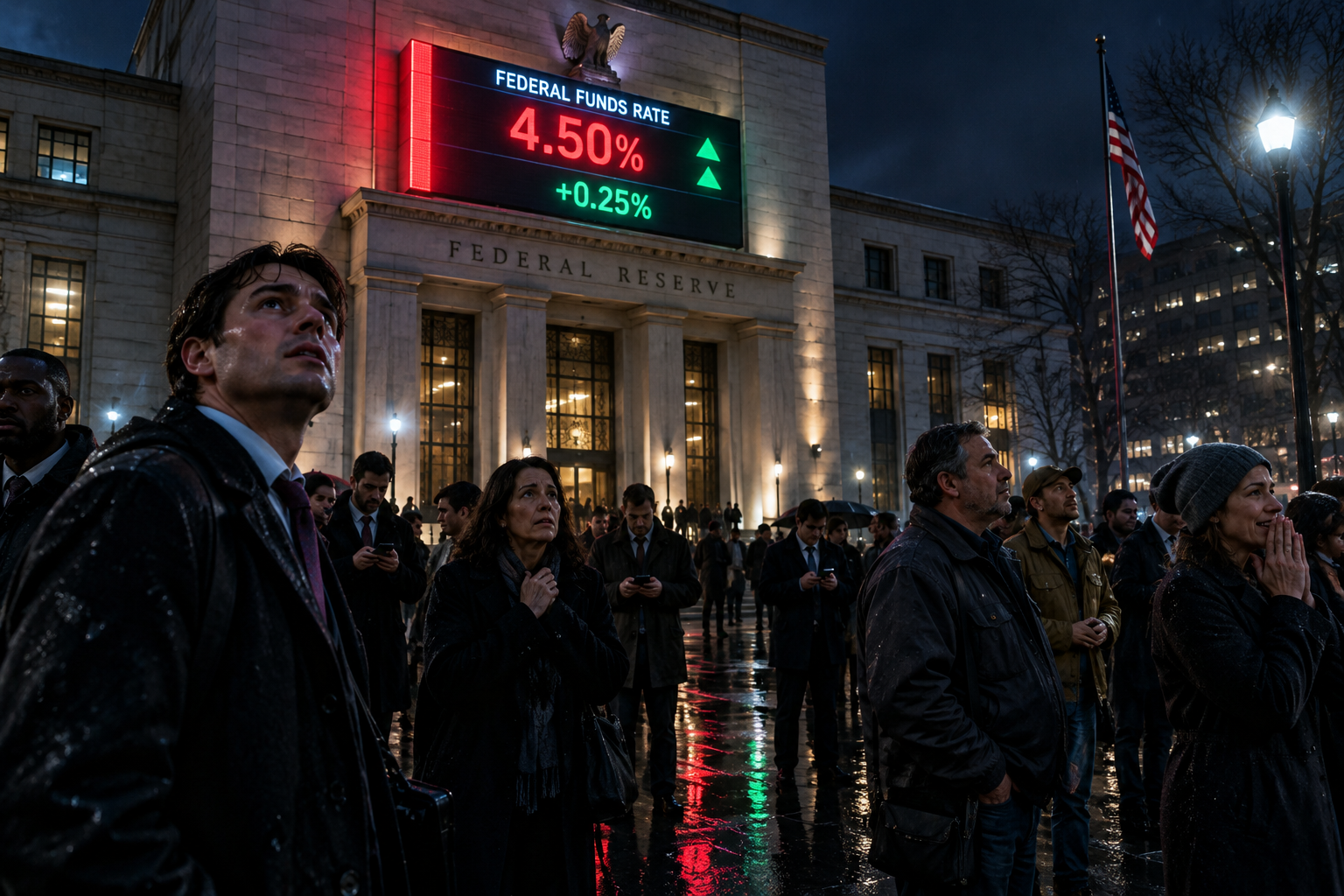
The Federal Reserve sits at the center of one of the hardest balancing acts in modern economic policy. When inflation rises too fast, the Fed is expected to cool demand without crushing growth. When unemployment climbs or financial conditions tighten too abruptly, it is expected to support the economy without reigniting the very inflation it worked to contain. That tension is why every policy meeting, speech, and projection from the central bank is watched so closely by households, investors, businesses, and lawmakers.
The real question is not simply whether the Fed is raising or cutting rates. It is whether its overall policy path is guiding the economy toward broad relief from inflation and instability, or whether it is increasing the odds of a recession by tightening too much, for too long, or too late. To answer that, it helps to examine how the Fed works, what signals it follows, and how its decisions ripple through jobs, borrowing, spending, asset prices, and confidence.
How monetary policy shapes the economy in practice
The Federal Reserve influences economic activity primarily through monetary policy. Its most visible tool is the federal funds rate, which is the interest rate banks charge one another for overnight lending. While consumers do not borrow at that exact rate, changes in it affect a broad range of borrowing costs across the economy, including mortgages, credit cards, auto loans, business loans, and Treasury yields.
When the Fed raises rates, borrowing becomes more expensive and financial conditions usually tighten. Households may delay home purchases, businesses may postpone expansion plans, and investors may reduce risk-taking. In theory, slower demand helps bring inflation down. When the Fed cuts rates, the opposite tends to happen. Credit becomes cheaper, asset prices often get support, and spending can improve.
The Fed also uses balance sheet policy. During and after crises, it has bought large quantities of Treasury securities and mortgage-backed securities to support liquidity and lower longer-term interest rates. When it allows those holdings to shrink, a process often called quantitative tightening, that can reinforce the effects of higher policy rates by draining liquidity and nudging longer-term yields higher.
The challenge is that monetary policy works with lags. The impact of a rate hike today may take months or even longer to fully show up in hiring, investment, defaults, and consumer behavior. That lag is one reason central banking is so difficult. The Fed must act based on what it expects the economy to do, not just what the latest data says.
For readers who want a direct explanation of the Fed’s dual mandate, the Federal Reserve’s monetary policy framework offers useful context on its goals of maximum employment and stable prices.

The Fed’s dual mandate creates a built-in tension
The Fed is tasked with pursuing maximum employment and stable prices. Those goals can complement each other over the long run, because a healthy labor market and low, predictable inflation support sustainable growth. In the short run, however, they can conflict.
If inflation is too high, the Fed may need to slow the economy enough to reduce pricing pressure. That can weaken hiring and raise unemployment. If the labor market softens too much, the Fed may need to reverse course and support growth, even if inflation has not fully returned to target. In that sense, the central bank is almost always managing trade-offs rather than solving a neat equation.
This tension is especially sharp after a burst of inflation. If the Fed acts too slowly, inflation can become embedded in wage demands, business pricing behavior, and consumer expectations. If it acts too aggressively, it can choke off demand and trigger a recession that might have been avoided with a more calibrated approach.
That is why debates over the Fed often center on timing and magnitude. Relief is possible if inflation falls without a major rise in unemployment. Recession risk rises if policy remains restrictive after inflation is already cooling and the economy is losing momentum.
What the Fed looks at when deciding its next move
Fed officials do not rely on a single number. They assess a broad dashboard of economic indicators to judge whether policy is too loose, too tight, or roughly appropriate.
Inflation data
Inflation is central to the Fed’s recent policy decisions. Officials monitor the Consumer Price Index, the Personal Consumption Expenditures price index, and core measures that exclude food and energy because those categories can be volatile. They also study services inflation, shelter costs, and wage-sensitive categories to understand whether price pressure is broadening or narrowing.
If headline inflation falls due to lower energy prices but core services remain hot, the Fed may conclude that underlying inflation is still too persistent. If both headline and core inflation cool in a durable way, the case for less restrictive policy grows stronger.
Labor market conditions
Employment data can either reassure the Fed or warn it that policy is biting too hard. Payroll growth, the unemployment rate, job openings, quits, wage growth, and labor force participation all matter. A labor market that remains strong while inflation falls is the ideal scenario. A rapid increase in unemployment, falling vacancies, and weaker wage growth can signal that recession risk is rising.
Consumer spending and business investment
The Fed also watches retail sales, personal consumption, capital expenditures, manufacturing surveys, and service-sector activity. Consumers drive a large share of US economic activity, so a meaningful slowdown in spending can quickly alter the outlook. Business investment matters because it affects productivity, hiring, and future growth.
Credit conditions and financial stress
Even if the policy rate stays unchanged, tighter bank lending standards or stress in bond markets can make credit harder to access. That means the economy may slow more than the headline rate suggests. If banks pull back after financial shocks, the Fed may need to account for that extra restraint.
Inflation expectations
Central banks care deeply about what people expect inflation to be in the future. If businesses and households believe inflation will remain high, they may act in ways that help keep it high. If expectations stay anchored near the Fed’s target, inflation is often easier to control. A helpful reference on this topic is the importance of inflation expectations from the Federal Reserve Bank of St. Louis.
How rate hikes can bring relief
There is a strong case that Fed tightening can steer the economy toward relief under the right conditions. Relief does not necessarily mean fast growth or booming markets. It means reducing inflation, restoring purchasing power, and improving confidence that prices will remain stable.
Lower inflation protects household budgets
High inflation acts like a tax on everyday life. It erodes wages, savings, and purchasing power. Families feel it at the grocery store, at the gas pump, in rent payments, and in insurance premiums. If Fed tightening successfully cools inflation, households can regain some stability in their budgets. Even if borrowing costs remain elevated for a time, slower price growth can still represent meaningful relief.
Price stability supports long-term planning
Businesses are more likely to invest when they can estimate future costs and demand with greater confidence. Workers can make career decisions more effectively when real wages are not being undermined by unexpected inflation. Lenders can price loans more rationally. In that sense, a period of restrictive policy can create the foundation for healthier expansion later.
A credible Fed can reduce the need for harsher action later
If the public believes the Fed will do what is necessary to contain inflation, inflation expectations may remain anchored. That credibility can reduce the amount of tightening required. Markets may adjust in anticipation, wage and price setting may moderate, and the economy may cool without the central bank needing to drive rates dramatically higher.
Supply and demand can rebalance without a deep contraction
Not every anti-inflation campaign ends in recession. Sometimes labor demand cools through fewer job openings rather than mass layoffs. Sometimes goods inflation falls as supply chains normalize. Sometimes housing activity slows enough to reduce price pressure without causing widespread distress. In these cases, the Fed can plausibly claim it is steering toward relief rather than collapse.
How the same policy path can tip into recession

The argument on the other side is just as important. Monetary tightening can become excessive, especially when the economy is already slowing for reasons unrelated to interest rates. Because policy works with a delay, the Fed can keep tightening based on backward-looking data and discover too late that the damage is already done.
Higher rates hit interest-sensitive sectors first
Housing is often the clearest example. Mortgage rates rise, affordability falls, home sales weaken, construction slows, and related industries feel the impact. Durable goods purchases, commercial real estate activity, and capital-intensive investment can also suffer. These sectors can transmit weakness to the broader economy through job losses and reduced spending.
Consumers can pull back abruptly
Many households can absorb modest increases in rates. But after a long period of rising prices, depleted savings, and heavier debt burdens, they may become much more sensitive to financing costs. If credit card rates rise, auto loans become less affordable, and job security weakens, consumer spending can slow sharply. Since consumption is such a large share of GDP, that shift can accelerate recession risk.
Businesses may cut hiring before inflation is fully defeated
Executives do not wait for official recession declarations. If they see weaker orders, more expensive financing, and softer pricing power, they may freeze hiring or reduce payrolls. Once layoffs rise, confidence can deteriorate quickly. That can create a feedback loop in which lower income leads to lower spending, which leads to further cuts.
Financial accidents can emerge under pressure
Periods of rapid rate increases can expose fragilities that were hidden when money was cheap. Banks, commercial property owners, highly leveraged firms, and speculative investors may all face stress. Even if inflation is moving lower, the Fed may find itself confronting instability in another corner of the system. In that case, the path toward relief becomes much narrower.
The soft landing question
Much of the debate around the Fed boils down to one phrase: soft landing. A soft landing means inflation comes down without a severe rise in unemployment or a broad contraction in economic activity. It is the most desired outcome and the hardest to achieve.
For a soft landing to occur, several things usually need to happen at once. Supply constraints must ease enough to help lower inflation. Wage growth must cool to a sustainable pace without collapsing household income. Financial conditions must remain restrictive enough to slow demand, but not so restrictive that credit markets seize up. Consumers must keep spending, but not too aggressively. Businesses must trim excesses, but not panic.
This is a narrow path. Critics of the Fed argue that history shows how difficult it is to reduce inflation from elevated levels without causing a recession. Supporters argue that each cycle is different and that modern communication tools, better data, and more flexible policy responses improve the odds.

Whether the Fed is steering toward relief or recession may depend less on one rate move and more on whether it can recognize when enough tightening has already occurred. The soft landing is not just about getting inflation lower. It is about knowing when to stop pressing the brakes.
Why timing matters more than slogans
Commentary about the Fed often becomes simplistic. Some say the central bank should keep rates high until inflation is fully defeated. Others say it should cut quickly to protect growth. In reality, timing matters more than slogans.
If the Fed eases too early, inflation could reaccelerate. That would undermine credibility and potentially require a second round of tightening. If the Fed waits too long, it may discover that inflation was already on a sustainable downward path while the labor market was quietly weakening. In that case, recession could arrive not because inflation was impossible to control, but because policy stayed restrictive after the emergency had passed.
Good central banking requires reading turning points, not just trends. That means paying attention to the direction of data, the breadth of changes across sectors, and the interaction between policy and market behavior. It also means acknowledging uncertainty. The Fed does not control oil prices, geopolitics, fiscal policy, or consumer psychology. It influences the economy, but it does not command it.
What households and businesses should watch
For people trying to understand where the economy is headed, it helps to focus on a few practical indicators rather than every market headline.
Watch core inflation and services inflation
If inflation is falling broadly, especially in sticky service categories, that supports the case for eventual relief. If inflation stalls above target, the Fed may keep policy tight longer than markets hope.
Watch unemployment claims and hiring trends
A modest cooling in hiring can be consistent with a soft landing. A rapid climb in jobless claims or a sharp drop in payroll growth may indicate that recession risks are becoming more serious.
Watch bank lending standards
Even without additional rate hikes, tighter lending can slow the economy materially. Small businesses and commercial borrowers are often especially exposed to this channel.
Watch consumer delinquencies and savings behavior
If households are increasingly relying on debt while falling behind on payments, the foundation of consumer spending may be weaker than headline sales figures suggest.
Watch Fed communication, but not only the headline rate decision
Press conferences, economic projections, and speeches can reveal whether officials are more worried about inflation persistence or growth deterioration. Often the tone of guidance matters as much as the actual move.
The market’s role in amplifying or easing Fed policy
Financial markets do not passively receive Fed policy. They interpret it, anticipate it, and sometimes counteract it. If investors believe rate cuts are coming soon, bond yields may fall and stock prices may rise, easing financial conditions before the Fed intends. That can support growth, but it can also make inflation harder to finish off.

On the other hand, if markets fear the Fed will stay restrictive for too long, yields may rise and risk assets may weaken, tightening conditions more than policymakers expected. This interaction means the Fed is partly steering the economy through expectations. Words matter because they shape how markets price future borrowing costs, earnings, and risk.
This is another reason the path toward relief or recession is not determined by policy rates alone. The same official rate can feel much tighter or looser depending on credit spreads, equity valuations, mortgage rates, and the availability of financing.
Historical lessons that still matter
History does not repeat perfectly, but it offers important warnings. Central banks that tolerate inflation for too long often end up needing harsher tightening later. At the same time, central banks that focus too narrowly on inflation after momentum has broken can deepen downturns.
Past episodes show that the economy can appear resilient right up until it is not. Labor markets often weaken late. Credit stress can build quietly. Asset prices can mask fragility until refinancing needs expose it. This is why declarations of victory or doom are usually premature.
The most useful historical lesson may be humility. Monetary policy can guide conditions, but it cannot guarantee a painless outcome. The Fed can improve the odds of relief by acting clearly, credibly, and flexibly. It can increase the odds of recession if it mistakes lagging data for current reality or treats uncertainty as confidence.
So is the Fed steering toward relief or recession?
The honest answer is that it is trying to steer toward relief, but the risk of recession remains inseparable from that effort. The Fed’s mission is not to create pain for its own sake. It is to restore price stability in a way that preserves as much labor market strength and financial stability as possible. When inflation is elevated, some degree of restraint is often necessary. The question is whether that restraint remains proportionate as conditions evolve.
If inflation continues to cool, labor markets soften gradually rather than abruptly, and credit stress remains contained, the Fed can plausibly guide the economy toward relief. That relief would show up as slower price increases, steadier real incomes, and a more durable expansion later on. If, however, the central bank keeps policy too tight as growth fades, or if hidden financial weaknesses emerge under the pressure of high rates, the same strategy can become the path to recession.
In the end, the Fed is not choosing between two cleanly separated roads. It is navigating a narrow corridor between persistent inflation and economic contraction. The success of that navigation depends on data, timing, communication, and a willingness to adjust course before either danger becomes dominant. For households and businesses, that means the smartest approach is not to bet on slogans, but to watch the underlying signals that reveal whether the economy is cooling into stability or sliding into something more painful.