

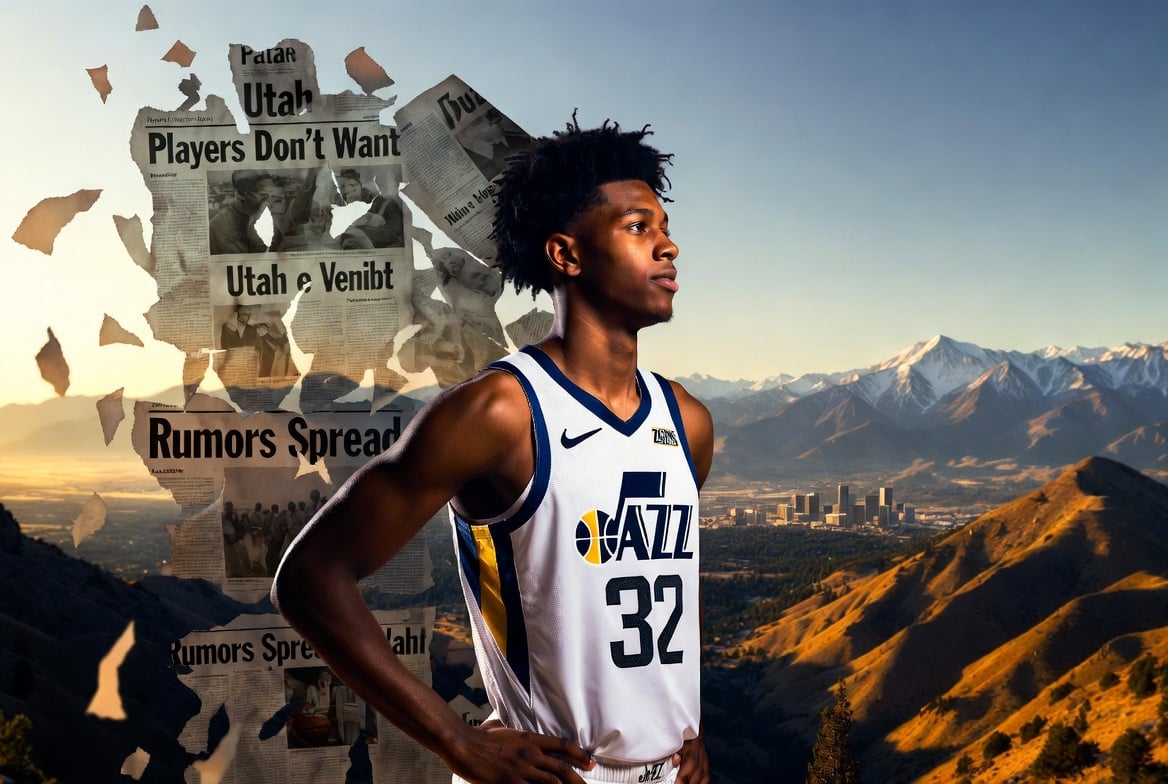
In the lead-up to recent NBA drafts, familiar stories have circulated: top prospects allegedly refusing workouts, avoiding visits, or signaling they don’t want to land with the Utah Jazz. Reports swirled around players like Ace Bailey (2025) and Darryn Peterson (2026), with media outlets amplifying claims that athletes simply “don’t want to play in Utah,” often framing the state as undesirable — especially for young Black athletes.
These narratives are not new. They recycle decades-old tropes about Salt Lake City and Utah being boring, conservative, or inhospitable. But closer examination reveals they are frequently lazy, evidence-light, and self-perpetuating.
Recent Examples of Rumors vs. Reality
Ace Bailey (2025 Draft Pick)
Pre-draft reports claimed Bailey had little interest in Utah. His agency and Bailey himself quickly pushed back. He stated he was “blessed to be here” and has since embraced the opportunity with his new teammates.
Darryn Peterson (2026 Draft Prospect)
Similar whispers suggested he was snubbing Jazz workouts. However, he met with Jazz officials at the combine and over the weekend before the draft. These moves often reflect standard leverage tactics rather than outright rejection of the organization or location.
Why These Narratives Are Lazy and Misleading
Media coverage often reduces complex player decisions to simplistic location stereotypes. Real factors — team culture, coaching staff, playing time, contract value, family considerations, and winning potential — matter far more to athletes than geography alone.
Utah offers athletes:
The “undesirable for Black athletes” framing often cites Utah’s small Black population and isolated past incidents. While real challenges exist (as former Jazz star Donovan Mitchell has discussed), broad generalizations ignore progress, individual experiences, and the fact that similar issues occur in many cities across the league.
Black Athletes Who Have Thrived and Loved Utah
Many Black athletes have built successful careers and lives in Utah, directly contradicting one-sided media portrayals.
Karl Malone
The Hall of Famer and two-time MVP spent his entire 18-year career with the Jazz. He embraced Utah’s mountains and lifestyle, owned multiple businesses in the state after retirement, and has consistently spoken positively about the area.
Thurl Bailey
Former Jazz forward who made Utah his permanent home. He once said: “I never had any problems. The people always treated me nice… It’s a great place.”
Derrick Favors & Current/Recent Players
Long-time Jazz big man Derrick Favors praised the community’s friendliness. Players such as Collin Sexton, Ochai Agbaji, and Mike Conley have participated positively in Jazz-organized events celebrating Black culture and experiences.
Moving Beyond Stereotypes
Utah and the Jazz are not perfect. Challenges around diversity deserve continued honest discussion and improvement through community programs. However, blanket claims that players and prospects inherently “don’t want to play there” are reductive and often unsupported by evidence once athletes arrive and experience the reality.
Athletes make decisions based on a wide range of personal and professional priorities. Some thrive in large diverse markets; others value Utah’s unique combination of opportunity, safety, natural beauty, and family-friendly environment.
“Media coverage that defaults to lazy tropes does a disservice to players, teams, and fans. It’s time for more nuanced reporting focused on facts and actual outcomes rather than recycled stereotypes.”